Links for Following the “Healing the Water” Walk

Track exactly where the group is today…

LIVE GPS tracking: (copy & Paste into browser)http://share.findmespot.com/shared/faces/viewspots.jsp?glId=0mPHV4igHadEVfpSyKWhmaoe1egzqco2g

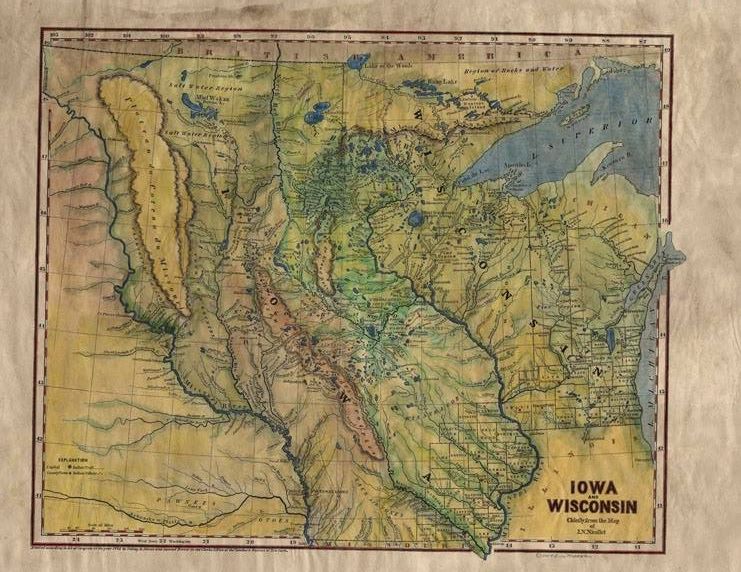
Schedule for the Walk (save this as a possible route for walking the entire length of the Mississippi River. This schedule presumes walking 25-30 miles per day.

https://word.office.live.com/wv/WordView.aspx?FBsrc=https%3A%2F%2Fwww.facebook.com%2Fdownload%2Ffile_preview.php%3Fid%3D551090901588065%26time%3D1363819016%26metadata&access_token=1381570422%3AAVLBnSAg3R0QABSDzNAoBkEMMGiYBGyCeSFq1LXn4bIgtw&title=Mississippi+River+Water+Walk+Updated+3.12.doc

The group also has a FACEBOOK page.

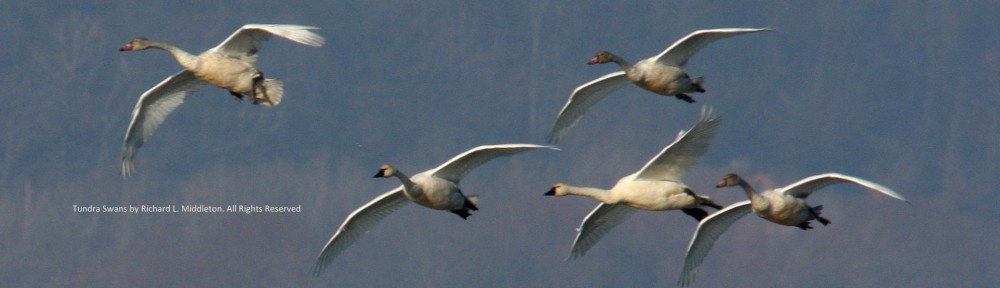
Tundra Swans Make Spring 2013 Debut, Brownsville, MN

I spent some time searching out information on the Ojibwa “Healing the River” walk yesterday. Thought it might interest others, so I’ve included my links in the next entry. Contemplating their walk prompted me to have a look at the charts and plan my own walk along the river. I chose to walk a mile above and below the Brownsville, Minnesota, birding overlook… and was rewarded by seeing several large flights of TUNDRA SWANS land directly opposite the overlook!!

They are not just at the overlook, however, but there seems to be a cluster just beyond several small islands just north of the overlook. They were not in the water, but standing or sleeping in the snow beside any open water…so look carefully!

Also abundant eagles, diving ducks, a pileated woodpecker! Walking along sparkling, open water when it is still cold and snowy is the next best thing to spring!!

Eagles, Eagles

Eagles on ice

With the river well frozen in most spots, January becomes and ideal time for American Bald Eagle watching on the Upper Mississippi River. Best spots for viewing are generally at the open water just below each of the Dams between Lake Pepin and St. Louis. But eagles will be found in trees, certain farm fields, and clustered–often in dozens or even hundreds–at any bit of ice where there is open water.

This week end, 1-25-2013, in Clarksville Missouri is Eagle Days an educational program hosted by the Missouri Department of Conservation. On Tuesday I counted 59 eagles from the Visitor Center in Clarksville. Clarksville was the first hosting site for the Eagle Days program starting back in ;the early 80′s when there were no nesting pairs in the state. Now there are between 100 to 200 nest in the state of Missouri. I hope everyone gets a chance to come see the eagles.

UPCOMING 2013 FESTIVALS:   Prairie du Chien, WI,  February 23.

Find more about EAGLES on the MISSISSIPPI by Search our Birding Categories, to the right, or by searching greatriver.com.


Sandhill Cranes, Pelicans and Mastodons!

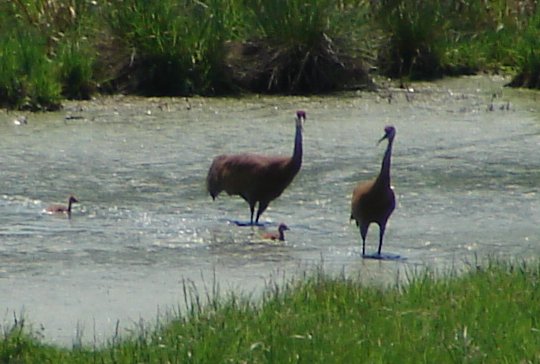
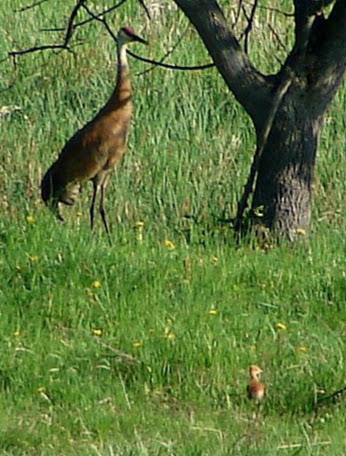
Nature’s alarm clock is back on! By 7 a.m. the calls of geese and cranes fill the marsh. Our next waterfowl alert will be the return of the White Pelican.

The pelicans normally follow the melting ice on the river, devouring the fish kill as they move north. Please post your on the comment pages of our Ramblin’ On Blog below!

Spring topics abound in the archives of Greatriver.com… Click HERE for www.greatriver.com birding archives or here for BIRDING archives from our RAMBLIN’ ON Blog.  To find a vast array of articles related specifically to Eagles, or Cranes, or other subjects, use our SEARCH engines!

Though rains and snow were both sparse this year, Spring always means a heightened interest in flood conditions along the Mississippi River.  Use our search engine to find interactive flood maps.

Record warmth has also prompted a number of media mentions pertaining to the ICE AGE and past GLACIAL patterns. We’ve done a number of feature stories about past ice ages and the formation of the Mississippi River. Find them here….

Ice Age Armadillos, The Clovis Connection.The Kimmswick, Missouri, mastodon www.greatriver.com/mastodon.htm

Glacial Lakes and Rivers form the Mississippi River Valley:

Read more about the effects of the Ice Age on the Mississippi River and the people who live along it today!  …greatriver.com/Ice_Age/glacier.htm

Springing Forward!

With 70 degree days predicted for early next week, we will be seeing more and more of our returning songbirds and waterfowl. Sandhill Cranes, robins, red-winged black-birds, starlings, bluebirds and such are already singing, in addition to Cardinals, titmice and other year-round residents. Sandhills are still very quiet, so they don’t seem to be claiming their nesting territories yet. Send us your comments!!  Click here to see our birding archive on the Ramblin’ On blog. 

With so little snow this winter, spring flooding is unlikely this season. To see an interactive flood map, as well as past flooding accounts, click here.

Snowy Owl with Jane at 2012 Festival of OwlsThe spring 2012 International Festival of Owls was held in Houston, Minnesota, last weekend. It is another harbinger of spring! (Snowy Owl pix, from Alan Stankevitz is left.)

We had a beautiful barred owl in our backyard early one morning last week. Hawks are paired up and bald eagles are nesting. I’ll be watching for the return of white pelicans next… they follow the opening of the Mississippi River… perhaps looking for fish kill as the ice breaks up.

We have featured WHITE PELICANS, EAGLES and other large waterfowl for many years on www.greatriver.com
Please visit our dedicated Birding Index here at Greatriver.com  It includes a long history of arrival dates for the sandhill cranes in the Upper Mississippi River valley.

Snowy Owl Update

This year has turned out to be one of the biggest Snowy Owl eruptions in many years. This has allowed many of us to see these magnificent birds that normally inhabit the tundra and it has been a great experience.

This event has resulted in a significant number of birds that have been found that are sick and injured. When they are found, these birds are taken to wildlife rehabilitators including the Coulee Wildlife Rehab Center in rural Chaseburg. These organizations always have trouble finding enough funding to help cover their costs and this event is adding even more financial burdens to organizations that often operate on a shoe string budget and are heavily dependent on donations in order to operate.

Already this year, Coulee Wildlife Rehab Center has had two Snowy Owls brought in to their center. The first was in the last stages of starvation and couldn’t be saved but the second is the victim of what is probably a power line accident and is in fairly good condition. It has an electrical burn on a wing that has required surgeries and it is under weight. However, there is a good chance that it can be saved.

Sue and Merv Broten, the operators of the facility, are working to improve its body mass and fight against aspergillosis. Snowy Owls are very susceptible to this fungal infection when they migrate this far south and one of the keys to prevention is to keep an owl from the stress of under nourishment. Starving Snowies can eat a LOT of mice a day, and at a cost of $1.00 to $1.50 per mouse, building their weight up is an expensive proposition.

In honor of this year’s eruption, the Coulee Region Audubon Society has decided to sponsor a special “Snowy Christmas” campaign to raise funds to help pay for the cost of rehabilitating these owls and to underwrite some of the operations of the Coulee Wildlife Rehab Center. We will match all donations made by our members and friends through the end of January up to a total of $200. We hope that you will consider making a tax deductible contribution to this campaign and therefore support the great work done by the Coulee Wildlife Rehab Center.

If you can help, please send a check to Coulee Region Audubon with a note indicating that it is to be used for this campaign or send a check directly to the Coulee Wildlife Rehab Center at the following address:

Coulee Wildlife Rehab Center, Inc.
E4485 Dodson Hollow Rd
Chaseburg, WI 54621

I hope that you will join me in supporting this cause!!

Dan Jackson, President
Coulee Region Audubon Society
La Crosse, Wisconsin

River Transitions

The seed islands north of Stoddard have been crowded this week with pelicans gathering for the trip south. With November just around the corner, and our first frosts already in the air, it’s time to start watching for Tundra Swans! I heard from Al Stankevitz that he has seen a very few towards the center of the pool at Brownsville, Mn. So be on the lookout for the long white necks of the Tundra Swans. In a few more weeks we should have many thousands!!

Just a reminder, too, that we have an extensive BIRDING section in the Mississippi River Home Page!

Please use the REPLY link to update our fellow birders on your observerations! This will be a spam-free way to keep one another posted on birding along the Mississippi River!!

Making the Galapagos Cruise HAPPEN!

Special Waterway Cruises Report

For many people, a visit to the Galapagos Islands off the coast of Ecuador hovers near the top of their travel “bucket list”… my advice is


DO IT NOW…
One criteria we have for our travel “bucket list”  is to visit the most fragile destinations FIRST, and the Galapagos is certainly one of these “endangered destinations.” 

The Galapagos National Park has become a laboratory for how to manage tourism in ways which protects a unique endemic and indigenous wildlife population. As a result, however, many regulations proposed for 2012 cruises will impose significant limits on how many islands visitors can access in one week.

According to press releases, the positive spin is that “New Itineraries Developed to Comply with New Galapagos National Park Regulations Will Enhance Experience While Minimizing Visitor Impact.”

In fact, the impact on the traveler is that an one-week cruise will soon require a  two-week cruise to see all twelve key islands and wildlife species that are on your list. With cruise tickets running at least $3500 per week, shopping for discounts will become increasingly critical.

We’ve received some sample itineraries from cruise operators which would come into effect under the new regulations.  There are some 58 islands in the Galapagos archipelago, which means the park is making a concerted effort to more efficiently disperse the 140,000 visitors currently allowed into the park each year.

Passengers who chose Itinerary A might visit the Southern & Central islands stopping at La Galapaguera, Cerro Brujo, Punta Pitt on San Cristobal, Punta Suarez and Gardner Bay on Espanola, Punta Cormorant, Post Office Bay and Devil’s Crown on Floreana, Humedales, Wall of Tears, Sierra Negra on Isabela, Bartolome, Black Turtle Cove and South Plaza Island as well as the highlands of Santa Cruz.

Passengers who book Itinerary B might visit the Northern & Western islands stopping at Playa Ochoa, Leon Dormido in San Cristobal, Prince Philips Steps and Darwin Bay in Genovesa, North Seymour, Bachas Beach, Darwin Station on Santa Cruz, Punta Espinoza in Fernandina, Tagus Cove, Elizabeth Bay and Urbina Bay in Isabela, Puerto Egas on Santiago, Santa Fe and Rabida Island.


By visiting in the remaining months of 2011, it is still possible to visit all twelve key islands throughout the archipelago, and see all the most desirable wildlife and waterfowl within the confines of a one-week tour. 

We recently returned from a cruise on the 32-passenger classic cruising yacht, Galapagos EVOLUTION (owned and operated by Quasar Expeditions). Quasar  was one of the very first cruise/tour operators in the Galapagos. The naturalist on our cruise was born in the Galapagos and had over 20 years of guiding experience. We thought they were a prime example of the “ethical operator” in the Galapagos. Quasar made planning our Ecuadoran visit simple. We found our visit to be very comfortable, safe, and memorable.

Each day of our EVOLUTION cruise involved two guided land hikes and two water-based excursions. Each island is unique in its geologic formation, and several have one or more endemic populations (found no where else on earth). The sea life among the islands is incredibly rich and each day involved snorkeling, dingy rides and kayaking.

Among these daily excursions, we had ample opportunities  to see iconic species of wildlife that make Galapagos famous: giant tortoises, penguins, frigate birds, boobies, flamingos, Darwin Finches, albatross, flightless cormorant, marine and land iguanas, lizards, many varieties of sea birds, whale, dolphins, sea turtles, sharks and sea lions…. and, yes, we did see hammerhead sharks!

Upcoming blog entries will share our Galapagos experiences with you!! So please return and join our conversation!


We also have some 30+ waterwaycruise destinations featured in our #1 rated WATERWAY CRUISE REPORTS at www.greatriver.com/waterwaycruises (click to visit!)

 Click here to return to our RAMBLIN’ ON Blog

Click here to return to the MISSISSIPPI RIVER HOME PAGE at www.greatriver.com

Sandhills announce SPRING, Eagles nest

The Canada geese and Sandhill Cranes arrived about 10 days earlier than I expected this year. Ground still frozen, several inches of crusty snow. Three nights ago it was just 15 degrees. They watch the weather currents pretty closely… will delay arrival if they see a storm… so they must know that spring is just around the corner! We’ve located the Valley Bald Eagle’s nest. Believe it is it’s second year. Saw a large handsome eagle standing guard in the neighboring tree last week. Bluebirds and robins abound, but they both spent the entire winter here in the valley. More common than I ever recall during a winter siege!